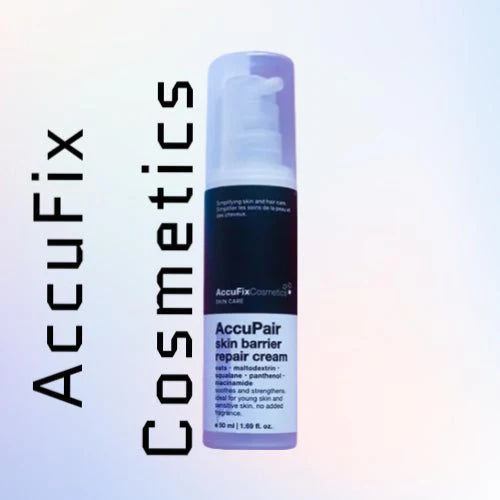
AccuFixCosmetics AccuPair Skin Barrier Repair Cream
A skin barrier repair cream/moisturiser that is especially ideal for sensitive skin types. It nourishes dry, dehydrated, and irritated skin, giving back to it, what it lacks with ingredients such as glycerin, cold-pressed, organic sunflower oil, and shea butter. It’s gentle enough to be suitable for toddlers.
How to Use
Massage a pea-sized amount into damp skin after cleansing. Use morning and evening or as frequently as desired.
Key Ingredients
Organic, Cold-Pressed Sunflower Seed Oil
-
Linoleic acid is an essential fatty acid that can help maintain the skin’s barrier function and prevent excessive water loss through the skin.
-
Studies have also shown that the sebum of acne patients tends to be deficient in this essential fatty acid.
-
Sunflower oil is very rich in linoleic acid which makes it an exceptional oil for people with acne-prone skin and dry skin, and even eczema or dermatitis. Linoleic acid also benefits the skin by helping strengthen cell membranes and shows antioxidant and anti-inflammatory activity.
-
Several studies have also suggested that sunflower oil also has anti-inflammatory properties. This also makes it a great option for people with sensitive skin.
Shea Butter
-
Shea butter is the fat extracted from the kernels of the shea tree and helps to soften and moisturise skin.
-
It consists of triglycerides with oleic, stearic, linoleic and palmitic fatty acids as their primary constituents alongside a high percentage of unsaponifiable compounds such as triterpenes, tocopherol, phenols and sterol, which possess potent anti-inflammatory and antioxidant properties.
-
Triterpenes are a group of compounds that partake in a wide range of biological reactions, are able to enhance tissue repair, and also have anti-inflammatory and anti-cancer properties. They are present in abundance in shea butter.
-
The triterpenes present in shea butter also exert an anti-ageing effect by deactivating enzymes that result in the breakdown of collagen.
- Shea butter’s ability to moisturise, alongside its anti-inflammatory and skin barrier repair effects, also make it highly beneficial for dry skin and dry skin conditions such as dermatitis and psoriasis.
Panthenol
-
Panthenol is the alcohol form of pantothenic acid, or vitamin B5.
-
It readily penetrates into the skin where it is converted to pantothenic acid.
-
Pantothenic acid is highly hygroscopic, i.e., it is effectively able to hold on to water, which is why it is often added to cosmetic formulas as a humectant, or an ingredient that is used to moisturise and hydrate the skin. It also helps maintain the integrity of the skin’s barrier and results in reduced rate of transepidermal water loss through the skin.
-
It also is able to improve the process of wound healing.
A skin barrier repair cream/moisturiser that is especially ideal for sensitive skin types. It nourishes dry, dehydrated, and irritated skin, giving back to it, what it lacks with ingredients such as glycerin, cold-pressed, organic sunflower oil, and shea butter. It’s gentle enough to be suitable for toddlers.
How to Use
Massage a pea-sized amount into damp skin after cleansing. Use morning and evening or as frequently as desired.
Key Ingredients
Organic, Cold-Pressed Sunflower Seed Oil
-
Linoleic acid is an essential fatty acid that can help maintain the skin’s barrier function and prevent excessive water loss through the skin.
-
Studies have also shown that the sebum of acne patients tends to be deficient in this essential fatty acid.
-
Sunflower oil is very rich in linoleic acid which makes it an exceptional oil for people with acne-prone skin and dry skin, and even eczema or dermatitis. Linoleic acid also benefits the skin by helping strengthen cell membranes and shows antioxidant and anti-inflammatory activity.
-
Several studies have also suggested that sunflower oil also has anti-inflammatory properties. This also makes it a great option for people with sensitive skin.
Shea Butter
-
Shea butter is the fat extracted from the kernels of the shea tree and helps to soften and moisturise skin.
-
It consists of triglycerides with oleic, stearic, linoleic and palmitic fatty acids as their primary constituents alongside a high percentage of unsaponifiable compounds such as triterpenes, tocopherol, phenols and sterol, which possess potent anti-inflammatory and antioxidant properties.
-
Triterpenes are a group of compounds that partake in a wide range of biological reactions, are able to enhance tissue repair, and also have anti-inflammatory and anti-cancer properties. They are present in abundance in shea butter.
-
The triterpenes present in shea butter also exert an anti-ageing effect by deactivating enzymes that result in the breakdown of collagen.
- Shea butter’s ability to moisturise, alongside its anti-inflammatory and skin barrier repair effects, also make it highly beneficial for dry skin and dry skin conditions such as dermatitis and psoriasis.
Panthenol
-
Panthenol is the alcohol form of pantothenic acid, or vitamin B5.
-
It readily penetrates into the skin where it is converted to pantothenic acid.
-
Pantothenic acid is highly hygroscopic, i.e., it is effectively able to hold on to water, which is why it is often added to cosmetic formulas as a humectant, or an ingredient that is used to moisturise and hydrate the skin. It also helps maintain the integrity of the skin’s barrier and results in reduced rate of transepidermal water loss through the skin.
-
It also is able to improve the process of wound healing.
Original: $7.16
-70%$7.16
$2.15Description
A skin barrier repair cream/moisturiser that is especially ideal for sensitive skin types. It nourishes dry, dehydrated, and irritated skin, giving back to it, what it lacks with ingredients such as glycerin, cold-pressed, organic sunflower oil, and shea butter. It’s gentle enough to be suitable for toddlers.
How to Use
Massage a pea-sized amount into damp skin after cleansing. Use morning and evening or as frequently as desired.
Key Ingredients
Organic, Cold-Pressed Sunflower Seed Oil
-
Linoleic acid is an essential fatty acid that can help maintain the skin’s barrier function and prevent excessive water loss through the skin.
-
Studies have also shown that the sebum of acne patients tends to be deficient in this essential fatty acid.
-
Sunflower oil is very rich in linoleic acid which makes it an exceptional oil for people with acne-prone skin and dry skin, and even eczema or dermatitis. Linoleic acid also benefits the skin by helping strengthen cell membranes and shows antioxidant and anti-inflammatory activity.
-
Several studies have also suggested that sunflower oil also has anti-inflammatory properties. This also makes it a great option for people with sensitive skin.
Shea Butter
-
Shea butter is the fat extracted from the kernels of the shea tree and helps to soften and moisturise skin.
-
It consists of triglycerides with oleic, stearic, linoleic and palmitic fatty acids as their primary constituents alongside a high percentage of unsaponifiable compounds such as triterpenes, tocopherol, phenols and sterol, which possess potent anti-inflammatory and antioxidant properties.
-
Triterpenes are a group of compounds that partake in a wide range of biological reactions, are able to enhance tissue repair, and also have anti-inflammatory and anti-cancer properties. They are present in abundance in shea butter.
-
The triterpenes present in shea butter also exert an anti-ageing effect by deactivating enzymes that result in the breakdown of collagen.
- Shea butter’s ability to moisturise, alongside its anti-inflammatory and skin barrier repair effects, also make it highly beneficial for dry skin and dry skin conditions such as dermatitis and psoriasis.
Panthenol
-
Panthenol is the alcohol form of pantothenic acid, or vitamin B5.
-
It readily penetrates into the skin where it is converted to pantothenic acid.
-
Pantothenic acid is highly hygroscopic, i.e., it is effectively able to hold on to water, which is why it is often added to cosmetic formulas as a humectant, or an ingredient that is used to moisturise and hydrate the skin. It also helps maintain the integrity of the skin’s barrier and results in reduced rate of transepidermal water loss through the skin.
-
It also is able to improve the process of wound healing.