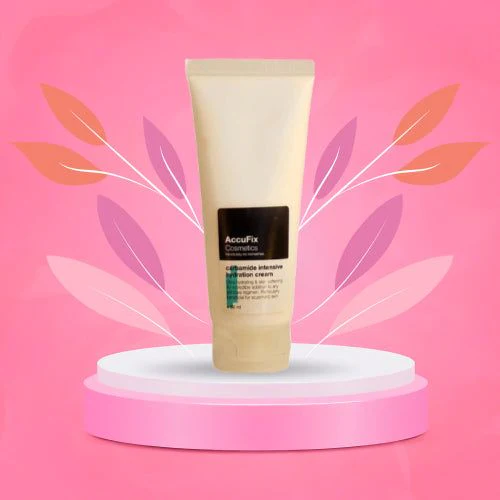
AccuFixCosmetics Carbamide Intensive Hydration Cream
How to Use
Massage a pea-sized amount into damp skin after cleansing. Use morning and evening or as frequently as desired.
Key Ingredients
Organic, Cold-Pressed, Sunflower Seed Oil
-
Linoleic acid is an essential fatty acid that can help maintain the skin’s barrier function and prevent excessive water loss through the skin.
-
Studies have also shown that the sebum of acne patients tends to be deficient in this essential fatty acid.
-
Sunflower oil is very rich in linoleic acid which makes it an exceptional oil for people with acne-prone skin and dry skin, and even eczema or dermatitis. Linoleic acid also benefits the skin by helping strengthen cell membranes and shows antioxidant and anti-inflammatory activity.
-
Several studies have also suggested that sunflower oil also has anti-inflammatory properties. This also makes it a great option for people with sensitive skin.
Urea
-
The upper layers of the skin contain a mix of substances that are able to draw water from the environment into the skin and keep it hydrated. These substances are collectively known as the skin’s Natural Moisturising Factor (NMF).
-
Skin hydration is essential as it helps maintain the skin’s elasticity, allows hydrolytic enzymes to perform their roles, and supports the barrier function of the skin’s outermost layer, which includes protecting the skin from foreign invaders, i.e. harmful microbes.
-
Changes in the skin’s barrier function are associated with a number of skin conditions including skin dryness, dermatitis and psoriasis. The level of NMF in the skin also declines with age, which is why mature skin typically tends to be dry and dehydrated.
-
The dry weight of the skin’s outer layer consists of around 20-30% NMF of which 7% consists of urea or carbamide.
-
Several studies have investigated the effectiveness of this ingredient in topical formulations where at lower doses, of less than 10%, it works exceptionally well to hydrate the skin, and at higher doses it acts as an exfoliant.
-
Studies have also shown urea to be an effective treatment in the management of dry skin and dermatitis.
Panthenol
-
Panthenol is the alcohol form of pantothenic acid, or vitamin B5.
-
It readily penetrates into the skin where it is converted to pantothenic acid.
-
Pantothenic acid is highly hygroscopic, i.e., it is effectively able to hold on to water, which is why it is often added to cosmetic formulas as a humectant, or an ingredient that is used to moisturise and hydrate the skin. It also helps maintain the integrity of the skin’s barrier and results in reduced rate of transepidermal water loss through the skin.
-
It also is able to improve the process of wound healing.
How to Use
Massage a pea-sized amount into damp skin after cleansing. Use morning and evening or as frequently as desired.
Key Ingredients
Organic, Cold-Pressed, Sunflower Seed Oil
-
Linoleic acid is an essential fatty acid that can help maintain the skin’s barrier function and prevent excessive water loss through the skin.
-
Studies have also shown that the sebum of acne patients tends to be deficient in this essential fatty acid.
-
Sunflower oil is very rich in linoleic acid which makes it an exceptional oil for people with acne-prone skin and dry skin, and even eczema or dermatitis. Linoleic acid also benefits the skin by helping strengthen cell membranes and shows antioxidant and anti-inflammatory activity.
-
Several studies have also suggested that sunflower oil also has anti-inflammatory properties. This also makes it a great option for people with sensitive skin.
Urea
-
The upper layers of the skin contain a mix of substances that are able to draw water from the environment into the skin and keep it hydrated. These substances are collectively known as the skin’s Natural Moisturising Factor (NMF).
-
Skin hydration is essential as it helps maintain the skin’s elasticity, allows hydrolytic enzymes to perform their roles, and supports the barrier function of the skin’s outermost layer, which includes protecting the skin from foreign invaders, i.e. harmful microbes.
-
Changes in the skin’s barrier function are associated with a number of skin conditions including skin dryness, dermatitis and psoriasis. The level of NMF in the skin also declines with age, which is why mature skin typically tends to be dry and dehydrated.
-
The dry weight of the skin’s outer layer consists of around 20-30% NMF of which 7% consists of urea or carbamide.
-
Several studies have investigated the effectiveness of this ingredient in topical formulations where at lower doses, of less than 10%, it works exceptionally well to hydrate the skin, and at higher doses it acts as an exfoliant.
-
Studies have also shown urea to be an effective treatment in the management of dry skin and dermatitis.
Panthenol
-
Panthenol is the alcohol form of pantothenic acid, or vitamin B5.
-
It readily penetrates into the skin where it is converted to pantothenic acid.
-
Pantothenic acid is highly hygroscopic, i.e., it is effectively able to hold on to water, which is why it is often added to cosmetic formulas as a humectant, or an ingredient that is used to moisturise and hydrate the skin. It also helps maintain the integrity of the skin’s barrier and results in reduced rate of transepidermal water loss through the skin.
-
It also is able to improve the process of wound healing.
Original: $7.88
-70%$7.88
$2.36Description
How to Use
Massage a pea-sized amount into damp skin after cleansing. Use morning and evening or as frequently as desired.
Key Ingredients
Organic, Cold-Pressed, Sunflower Seed Oil
-
Linoleic acid is an essential fatty acid that can help maintain the skin’s barrier function and prevent excessive water loss through the skin.
-
Studies have also shown that the sebum of acne patients tends to be deficient in this essential fatty acid.
-
Sunflower oil is very rich in linoleic acid which makes it an exceptional oil for people with acne-prone skin and dry skin, and even eczema or dermatitis. Linoleic acid also benefits the skin by helping strengthen cell membranes and shows antioxidant and anti-inflammatory activity.
-
Several studies have also suggested that sunflower oil also has anti-inflammatory properties. This also makes it a great option for people with sensitive skin.
Urea
-
The upper layers of the skin contain a mix of substances that are able to draw water from the environment into the skin and keep it hydrated. These substances are collectively known as the skin’s Natural Moisturising Factor (NMF).
-
Skin hydration is essential as it helps maintain the skin’s elasticity, allows hydrolytic enzymes to perform their roles, and supports the barrier function of the skin’s outermost layer, which includes protecting the skin from foreign invaders, i.e. harmful microbes.
-
Changes in the skin’s barrier function are associated with a number of skin conditions including skin dryness, dermatitis and psoriasis. The level of NMF in the skin also declines with age, which is why mature skin typically tends to be dry and dehydrated.
-
The dry weight of the skin’s outer layer consists of around 20-30% NMF of which 7% consists of urea or carbamide.
-
Several studies have investigated the effectiveness of this ingredient in topical formulations where at lower doses, of less than 10%, it works exceptionally well to hydrate the skin, and at higher doses it acts as an exfoliant.
-
Studies have also shown urea to be an effective treatment in the management of dry skin and dermatitis.
Panthenol
-
Panthenol is the alcohol form of pantothenic acid, or vitamin B5.
-
It readily penetrates into the skin where it is converted to pantothenic acid.
-
Pantothenic acid is highly hygroscopic, i.e., it is effectively able to hold on to water, which is why it is often added to cosmetic formulas as a humectant, or an ingredient that is used to moisturise and hydrate the skin. It also helps maintain the integrity of the skin’s barrier and results in reduced rate of transepidermal water loss through the skin.
-
It also is able to improve the process of wound healing.